


Understanding residency vs citizenship by investment is essential for investors seeking global mobility and flexible living options. While both pathways open doors to international opportunities, they differ significantly in rights, costs, and long-term benefits. Many investors want freedom to travel, better opportunities for their families, and the flexibility to live in another country. Investment-based immigration programs offer different ways to achieve these goals.
Whether you are planning to relocate, expand your business, or secure your family’s future, choosing the right program begins with understanding how each option works.
What Is Residency by Investment?
Residency by investment allows eligible foreign nationals to obtain legal residence in another country by making a qualifying financial investment. Depending on the program, investors may qualify through approved investment funds, business investments, or property purchases. The requirements vary considerably between countries.
The main advantage of residency through investment is the opportunity to establish a legal presence abroad without immediately changing nationality.
Potential benefits include:
-
- The ability to live in the host country under specified conditions.
-
- Access to education and healthcare, subject to local eligibility rules.
-
- Opportunities to establish businesses and explore new markets.
-
- The possibility of including eligible family members.
-
- Potential pathways towards permanent residence.
What Is Citizenship by Investment?
Citizenship by investment offers eligible applicants the opportunity to acquire nationality through an approved economic contribution. Unlike residence programs, which initially grant permission to live in a country, citizenship through investment can lead directly to nationality once the applicant meets all legal requirements.
Qualifying investments may include government contributions, approved real estate purchases, or other authorized economic activities.
Depending on the country, potential benefits include:
-
- A second passport and additional international mobility.
-
- Greater flexibility in choosing where to live.
-
- Citizenship rights for qualifying family members.
-
- Long-term security through an additional nationality.
-
- New opportunities for international business and investment.
However, passport privileges, tax responsibilities, dual-nationality rules, and application requirements differ between countries.
Investors should also remember that acquiring another nationality does not automatically remove their existing legal or tax obligations.

Residency vs Citizenship by Investment: Key Differences
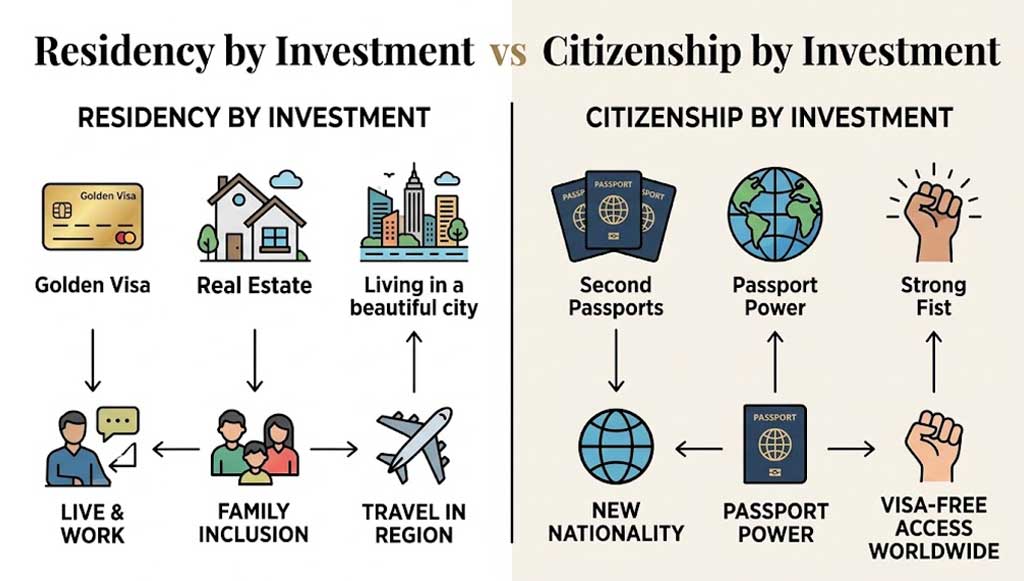
The biggest difference between these programs is the legal status they provide. Residency by investment generally grants permission to reside in a country, whereas citizenship provides nationality and the rights associated with it. When comparing residency by investment vs citizenship by investment, investors should consider more than the initial investment amount.
Processing periods, government fees, due diligence, family eligibility, and ongoing compliance can significantly influence the overall experience.
Golden Visa vs Citizenship: Understanding the Difference
The comparison of golden visa vs citizenship is particularly important for investors exploring European opportunities.
A golden visa commonly refers to a residence program linked to an eligible investment. It may allow investors and qualifying family members to obtain residence rights while meeting specific program conditions. Citizenship, however, provides nationality and usually comes with broader legal rights.
Some residence programs may eventually support a citizenship application, but applicants must independently satisfy requirements, which can include residence periods, language skills, and integration conditions.
Understanding golden visa and citizenship helps prevent unrealistic expectations about travel freedom and long-term immigration benefits.
Residency via Investment: Popular Destinations
Several countries offer investment-related residence opportunities, although eligibility rules and investment categories change over time.
Portugal remains a recognised destination for qualifying investment-based residence routes, but direct residential property purchases no longer qualify under its golden visa program.
Greece offers residence opportunities through eligible investments, including certain real estate categories, subject to location-specific thresholds and restrictions. Italy also provides investor residence options through qualifying financial and business investments.
For investors considering residency via investment, selecting a destination should depend on lifestyle preferences, family needs, investment objectives, and future plans.
It is equally important to examine whether the chosen investment must be maintained to preserve residence rights.
Citizenship Through Investment: Countries to Explore
Several countries operate established programs offering nationality to qualifying investors. Caribbean destinations such as Antigua and Barbuda, Dominica, Grenada, and Saint Lucia have citizenship programs with different qualifying investment routes. Türkiye also offers a citizenship route linked to qualifying real estate investment, subject to minimum investment requirements and holding conditions.
For those exploring citizenship via investment, the choice should reflect more than passport rankings or advertised processing times. Applicants should review program credibility, background checks, investment risks, family eligibility, and the responsibilities associated with obtaining another nationality.
Independent legal advice is particularly important before making any irreversible financial commitment.
Residency vs Citizenship by Investment: Which Is Better?
There is no single option that suits every investor. If your main priority is relocating, accessing new business markets, or creating an international home for your family, residency via investment may be worth exploring.
If you want an additional nationality and the long-term rights associated with another passport, citizenship via investment may better match your objectives. When considering golden visa and citizenship, think carefully about how frequently you intend to travel, whether you plan to relocate permanently, and what benefits your family needs.
Financial planning is equally important. Investment costs are only one part of the decision, alongside taxes, legal fees, government charges, and ongoing obligations.
How Xpert Global Property Can Help
International property investment requires careful research, particularly when immigration eligibility is involved.
Xpert Global Properties help investors explore international real estate opportunities aligned with their property and immigration objectives. Understanding the relationship between residency by investment and property ownership can help investors identify opportunities that fit their longer-term plans. Before purchasing, it is essential to confirm that a property qualifies under the relevant program and that the investment meets current government requirements.
Professional guidance can also help investors understand property selection, documentation, and the importance of independent immigration advice.
Final Thoughts: Residency vs Citizenship by Investment
Ultimately, the decision between residency by investment vs citizenship by investment depends on your personal goals, financial circumstances, and desired level of international mobility.
Whether your priority is relocation, a second nationality, or international property ownership, understanding golden visa and citizenship is an important starting point.